


Rejection Sensitivity Dysphoria Support
On Sale
$10.00
$10.00
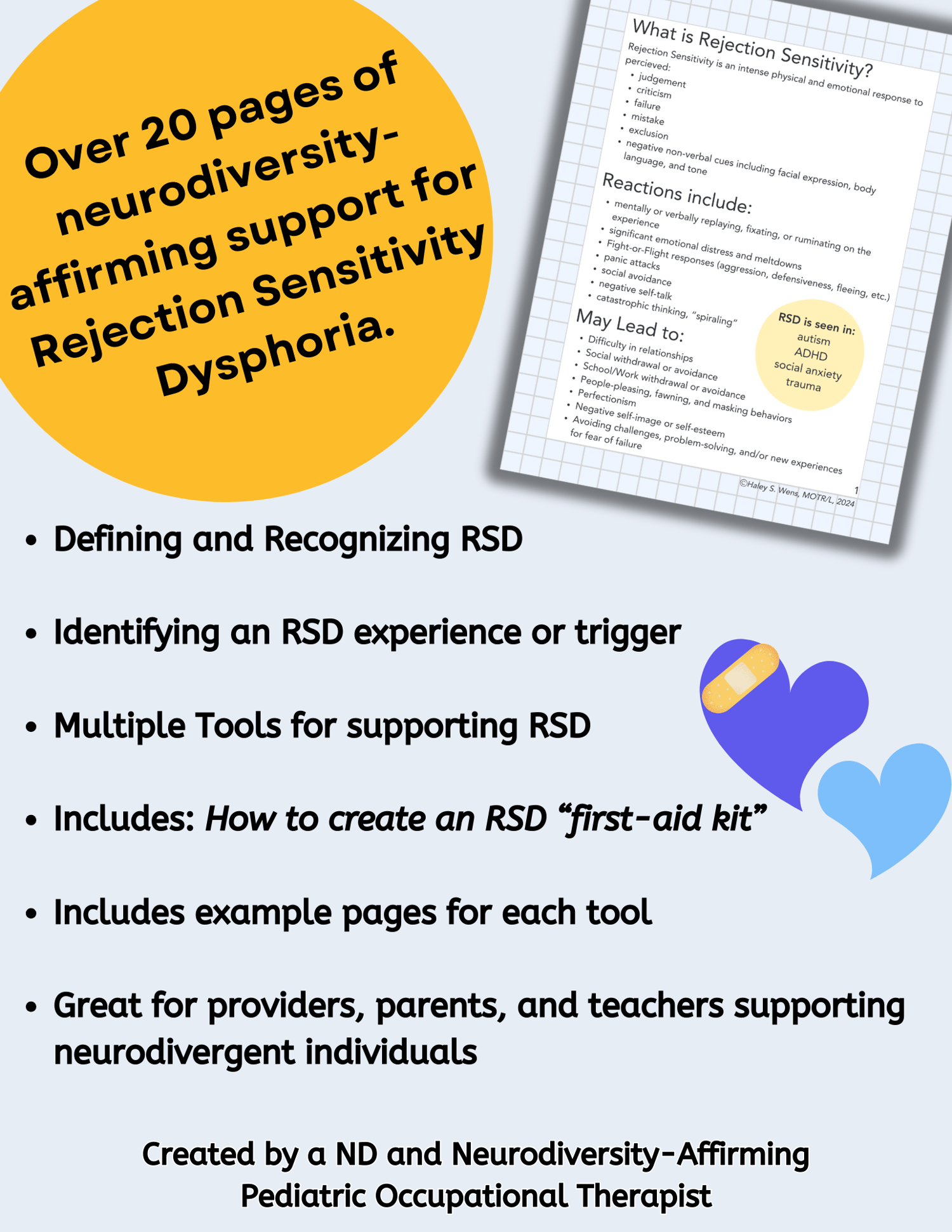
20+ Pages of information about defining and recognizing Rejection Sensitivity Dysphoria (RSD), and tools/exercises/activities to identify and support RSD. Includes multiple sample pages to model the use of tools and exercises.
Rejection Sensitivity Dysphoria (RSD) is an intense physical and emotional response to perceived:
- judgement
- criticism
- failure
- mistake
- exclusion
- negative non-verbal cues including facial expression, body language, and tone
Reactions include:
- mentally or verbally replaying, fixating, or ruminating on the experience
- significant emotional distress and meltdowns
- Fight-or-Flight responses (aggression, defensiveness, fleeing, etc.)
- panic attacks
- social avoidance
- negative self-talk
- catastrophic thinking, “spiraling”
RSD May Lead to:
- Difficulty in relationships
- Social withdrawal or avoidance
- School/Work withdrawal or avoidance
- People-pleasing, fawning, and masking behaviors
- Perfectionism
- Negative self-image or self-esteem
- Avoiding challenges, problem-solving, and/or new experiences for fear of failure
RSD can be seen in:
autism
ADHD
social anxiety
trauma